
.svg)

Travel insurance for India
Travel insurance for India




Written by
Rachel Gregg
Edited by
Ellie Garran
Reviewed by
Adrian BennettEasily compare Travel Insurance
Save time and effort by comparing a range of travel insurance policies with iSelect

Do I need travel insurance for India?

Long story short
Travel insurance isn’t as costly as you think
Insurance for a week-long trip in India could set you back an average of $46 for basic cover or $96 for a comprehensive policy.
Safety should be a priority for your trip
From petty theft to travel warnings for specific regions, India comes with its own set of risks. Travel insurance can help protect you from many risks on the road.
You’ll need a visa to visit India
Most travellers will need a Tourist e-Visa before entering the country. Just make sure e-Visas are accepted at your arrival airport.
Do I need travel insurance for India?
You don’t need travel insurance to enter India, but a comprehensive travel policy could be a smart move. A policy can protect you if your luggage gets lost, you encounter emergency medical expenses, or delays derail your plans. Alongside a range of other benefits, travel insurance can be a great safety net if the unexpected happens.
India is an enchanting destination that gives you a little bit of everything. From lush ecosystems to vibrant markets, warm hospitality, and more cultural experiences, you could pack into one trip. But it might not all be smooth sailing. The country has a Smartraveller advice level of ‘Exercise a high degree of caution’ (and some areas even have a ‘Do not travel’ advice level), so doing your homework before you go (and getting cover) could be essential.
What popular activities in India can travel insurance cover?

Create your own tiger tale
India is one of the few countries left where travellers can see tigers in the wild. But even at dedicated wildlife parks, there’s still an element of luck involved in seeing these elusive, endangered animals. If you do try to see tigers, remember that fatal tiger attacks do occur in India. Make sure to choose a reputable guide and always follow instructions about maintaining a safe distance.

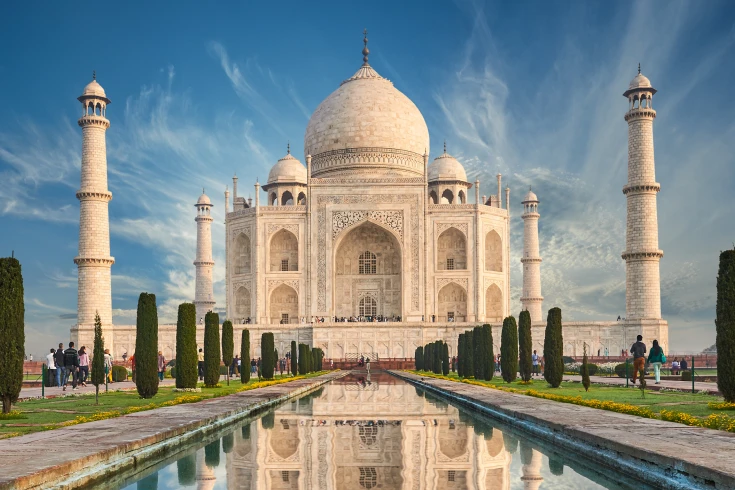
Take in the majesty of the Taj Mahal
Adorned in ivory-white marble and semi-precious stones, the iconic Taj Mahal is a must-see landmark for travellers exploring northern India. The Taj isn’t just the ultimate love letter carved in stone; it’s also a feat of 17th-century architecture. While it’s breathtaking, it’s also packed with crowds and pickpockets. Theft is common at big attractions like this, so carry only what you need, pay close attention to your belongings, and stay alert. If something does go wrong and you fall victim to pickpockets, travel insurance could help you replace your stuff.

Cruise the backwaters of Kerala
Kerala’s famous backwaters stretch along 900 km of shoreline, with rivers, lakes, and lagoons. This creates a serene region of palm-shaded villages, paddy fields, and thatch-roofed houseboats. A houseboat cruise is the best way to take in all the sights and ambience of Kerala. Just make sure your policy covers river cruises or cancellation fees if some stormy weather rolls in and threatens your tour.

Trek in the Himalayas
Stunning mountain scenery, flower-filled meadows, and even the rare chance to spot a snow leopard are all part of a Himalayan trekking experience. But big landscapes come with big risks. Sprains, altitude sickness, and accidents can happen quickly in rugged terrain. Travel insurance can help, but remember, if you’re hiking above a certain altitude, you might need extra adventure cover, so always read the policy wording.

Ride the rails
India features an impressive rail network, recognised as the fourth-longest in the world. There are numerous routes to choose from, each with its own charms. The Toy Train to Darjeeling is a crown jewel among all of India’s routes. This is a UNESCO-listed ride through a renowned tea region that takes you to one of India’s highest railway stations. But as always when travelling in India, be sure to pay attention to your personal safety and keep your belongings secure. Travel insurance could help replace any valuables stolen during your journey.

‘India has a total of 22 official languages, and while you won’t have time to learn them all, a simple ‘hello’ in the local tongue could win you points with the locals.
India also has no shortage of cultural and religious public holidays (that’s not including each state’s special days). Timing your trip around big festivals like Diwali, Durga Puja, Holi, or Pongal means you’ll get front-row seats to some of the most colourful, energetic celebrations on the planet.’
Kervin Matthew
Digital Writer, iSelect
What can travel insurance cover in India?
 Medical problems
Your policy could cover medical bills, ambulance transport and emergency evacuation costs, dental treatment and more.
Personal liability
If you injure someone or damage property while you’re in India, some policies can help you manage your expenses.
Cancellation fees and lost deposits
If you have to cancel or rearrange any part of your trip, insurance could help reimburse your deposits and incur cancellation fees.
Lost or delayed luggage
If your luggage is lost, stolen, or delayed, most policies will help you replace your items, up to certain limits.
Travel delays and cancellations
If your travel plans are disrupted by adverse events, then you may be entitled to get a payment to cover the expenses of additional meals and accommodation.
Lost or stolen travel documents
If you need to replace passports or visas during your holiday, travel insurance can help cover the associated costs.
Rental vehicle excess
If you crash your rental car, then you may be protected against the rental company’s insurance excess payment up to the limit specified on your cover.
 Undeclared medical conditions
If you encounter issues because of an undeclared pre-existing medical condition, your claim could be rejected.
Stolen belongings in shared spaces
If you leave your bags or belongings unattended in a public space and they’re stolen, your policy might not cover it.
Taking on activities outside of your cover
You might need to purchase additional cover for certain adventure activities, like hiking above 3,000 metres.
Travelling to a ‘Do not travel’ area
Some insurers may refuse to cover trips to dangerous areas in India. If you still intend to travel to these parts of India, check with individual insurers to see if you can still be covered.
Being under the influence or breaking the law
If you’re trying to claim an incident caused by abusing alcohol or drugs, or something that breaks the law, it likely won’t be covered.
Medical problems
Your policy could cover medical bills, ambulance transport and emergency evacuation costs, dental treatment and more.
Personal liability
If you injure someone or damage property while you’re in India, some policies can help you manage your expenses.
Cancellation fees and lost deposits
If you have to cancel or rearrange any part of your trip, insurance could help reimburse your deposits and incur cancellation fees.
Lost or delayed luggage
If your luggage is lost, stolen, or delayed, most policies will help you replace your items, up to certain limits.
Travel delays and cancellations
If your travel plans are disrupted by adverse events, then you may be entitled to get a payment to cover the expenses of additional meals and accommodation.
Lost or stolen travel documents
If you need to replace passports or visas during your holiday, travel insurance can help cover the associated costs.
Rental vehicle excess
If you crash your rental car, then you may be protected against the rental company’s insurance excess payment up to the limit specified on your cover.
Undeclared medical conditions
If you encounter issues because of an undeclared pre-existing medical condition, your claim could be rejected.
Stolen belongings in shared spaces
If you leave your bags or belongings unattended in a public space and they’re stolen, your policy might not cover it.
Taking on activities outside of your cover
You might need to purchase additional cover for certain adventure activities, like hiking above 3,000 metres.
Travelling to a ‘Do not travel’ area
Some insurers may refuse to cover trips to dangerous areas in India. If you still intend to travel to these parts of India, check with individual insurers to see if you can still be covered.
Being under the influence or breaking the law
If you’re trying to claim an incident caused by abusing alcohol or drugs, or something that breaks the law, it likely won’t be covered.
How much does travel insurance for India usually cost?
Every provider prices things differently, but comparing policies from iSelect’s range as of August 2025, basic travel insurance for a week in India will set you back around $46, with comprehensive cover about $96.1Indicative pricing based on a 30-year-old solo traveller with no extra coverage needed. Comparison conducted via the iSelect website, August 2025. Just remember that your policy premium can change slightly depending on factors like your age and pre-existing medical conditions.
Travel tips for India
India is only becoming more popular on Aussie travel lists, with trips jumping up by 10% in the past year – that’s 427,000 for the year ending March 2025. But like any destination, it’s important to be mindful of some risks you could encounter. Get to know these hazards and how travel insurance can support your journey.
Safety
As of August 2025, travel advice in India varies depending on where you’re headed. Travellers are advised to reconsider travel to the Attari-Wagah border crossing, Chhattisgarh (central India), Nagaland, and parts of Assam, due to the high risk of violence. The Union Territory of Jammu and Kashmir, the India–Pakistan border, and Manipur (eastern region near Myanmar) are all ‘Do not travel’ destinations. This is all due to the danger of armed clashes, terrorist activities and violent demonstrations.
In terms of more general safety issues, female travellers should be extra cautious, as harassment and assault reports are higher in major cities and tourist sites. Food and drink spiking can happen, so never leave your meals unattended. Petty theft is also common in markets and on public transport, with thieves on motorbikes snatching bags and jewellery from pedestrians.
Extreme weather
Natural disasters and extreme weather are common in parts of India. Heatwaves, droughts, floods, landslides, cyclones, storms, dust storms, earthquakes, and tsunamis are all on the cards. Floods and landslides are highly likely from June to October, especially in the north, east and south regions. Cyclones are common in Indian waters from April to December, particularly around the Bay of Bengal in the east. Earthquakes are more common in the north-eastern regions. No matter where you go, make sure to keep an eye on the forecasts.
Health
Water-borne, food-borne, and parasitic viruses, including cholera, typhoid, and hepatitis, are common across India. So, make sure you only drink bottled water, and maybe skip that questionable-looking street snack. HIV/AIDS is also widespread across the country, as are various strains of influenza and Mpox. Add in a lineup of nasty insect-borne diseases like malaria, dengue, zika virus, Japanese encephalitis, chikungunya, and filariasis, and insect repellent and vaccinations are a must. India can also have dangerous air pollution levels, especially in winter, which can cause transport delays and breathing problems.
Road safety
The roads in India can be scenic, but they’re also chaotic. Roads are often in poor condition and shared with everything from pedestrians to cows. Driving at night can be especially risky, with little to no lighting. You will, however, be able to drive in India without needing an Indian driver’s licence for the first three months. But you’ll need an international driving permit (IDP) and your current Australian driver’s licence. Expect frequent delays, too; fog in December and January can throw off road, rail, and even air travel.
Visa
A visa is essential for visiting India, and you should ideally apply before flying out. If you’re visiting India as a tourist, you’ll be able to apply for a Tourist e-Visa for either 30 days, one year, or five years. Once you arrive, it gets stamped into your passport as a formal visa. Just check your arrival airport before you book, as not all international airports accept e-Visas. Make sure to check with your nearest Indian consulate or embassy so you’re not caught short at the border.
Frequently asked questions
Which companies offer travel insurance for India?
There are so many travel insurers out there to help you stay protected for your trip to India.
Some insurers that iSelect can help you compare include:
- Fast Cover
- Huddle Insurance
- Insure4less
- InsureandGo
- ReadySet Travel Insurance
- Southern Cross Travel Insurance
- Tick Travel Insurance
- Travel Insurance Saver
- Travel Insuranz
- Travel Protect
- WAS Insurance
- World2Cover
- Zoom Travel Insurance
Other travel insurers in the market include:
- 1Cover
- Allianz
- Blue Insurance
- Budget Direct
- Bupa Travel Insurance
- Cover-More
- Everyday Travel Insurance
- Medibank
- Nib
- RACV Travel Insurance
- Travel Insurance Direct
Note: iSelect does not compare all travel insurance providers in the market, or all products offered by our partners in your area.
What travel insurance do I need for India?
The type of travel insurance you need for your trip to India depends on you. Maybe you really want a holiday but have a tiny budget to get you there. In that case, you might find a medical-only policy will work for your style of travel, and most importantly, your budget. But if you’ve saved up a nice little nest egg for your trip, or you want added peace of mind for whatever might pop up, a comprehensive policy might be a better fit. Since no two holidays will be the same, your policy won’t be either.
Does travel insurance for India cover COVID-19?
Travel insurance for India usually includes COVID-19 cover, but make sure to read your policy details, as providers can offer protection in different ways. For example, medical costs you incur after returning to Australia might not be covered. Review the product disclosure statement (PDS) to find relevant information.
Spice up your trip (worry-free) with travel insurance for India
India is full of markets, temples, and train rides, and with the right cover, you can enjoy it all without sweating over the what-ifs. No matter what surprises might come your way, travel insurance can give you that much-needed peace of mind during your India trip. Compare travel insurance from a range of providers and policies today to find a fit for your trip.
Easily compare Travel insurance quotes
Save time and effort by comparing a range of travel insurance policies with iSelect
iSelect does not compare all travel insurers or policies in the market. Travel insurance is only available through our website and not all policies are available at all times or in all areas. Not all policies available from our partners are compared by iSelect and due to commercial arrangements and customer circumstances not all policies compared by iSelect will be available to all customers. Click here to view iSelect’s range of providers.
iSelect General Pty Limited ABN 90 131 798 126, AFS Licence Number: 334115. Any advice provided by iSelect is of a general nature and does not take into account your objectives, financial situation or needs. You need to consider the appropriateness of any information or general advice iSelect gives you, having regard to your personal situation, before acting on iSelect’s advice or purchasing any policy. You should consider iSelect’s Financial Services Guide which provides information about our services and your rights as a client of iSelect. iSelect receives commission for each policy sold.