
.svg)

Travel insurance for Japan
Travel insurance for Japan




Written by
Rachel Gregg
Edited by
Ellie Garran
Reviewed by
Adrian BennettEasily compare Travel Insurance
Save time and effort by comparing a range of travel insurance policies with iSelect



Long story short
Accidents can happen, even in one of the safest countries
From skiing accidents to hiking emergencies, travel insurance can help make sure unexpected accidents or losses on your trip are covered.
Covering your trip to Japan doesn’t have to cost an arm and a leg
Comprehensive policies for a week-long trip to Japan can cost around $83 – that’s nearly the same as a ticket to a Sumo tournament.1Prices from our website May 2026 for comprehensive cover, $200 excess for one person aged 30, travelling to Japan 24th – 30th May. Cover for trip cancellation $10,000, cover for luggage $5,000 and no pre-existing medical conditions. Prices are indicative only.
Some adrenaline-filled activities will need extra cover
If you’re planning to ski in Niseko or climb Mount Fuji, you’ll need some extra coverage on your policy to be covered for any accidents.
Do I need travel insurance for Japan?
Travel insurance for Japan isn’t mandatory, but it’s highly recommended by the Australian Government’s Smartraveller. Japan doesn’t have a reciprocal healthcare agreement with Australia, which means, without travel insurance, any medical bills will be left to you to pay entirely. Travel insurance can help cover hospital expenses alongside other common travel issues like lost luggage, plus extra coverage for snow sports, for an additional premium.
Even in the safest of destinations, travel doesn’t always go to plan, so if you want some added peace of mind, you might want to pack a policy with your bags. Travel insurance isn’t just there for the medical benefits; it can also help protect you from those unplanned things that might pop up on your trip. So if your train to the airport gets delayed because of a wild boar (yes, that can happen), or you have to pay excess for an accident with a rental car, travel insurance can help cover these costs.
What activities in Japan can travel insurance cover?
Activities that travel insurance cover come in handy for while in Japan can include white water rafting, hiking (especially on challenging or remote mountains), cycling along remote coastal tracks and any snow sports during winter. Standard travel insurance will include benefits for medical emergencies, cancellations and personal liability, but you could need extra cover such as adventure or snow sports options to protect you from unexpected accidents for higher risk activities.

Hit the slopes at some of Japan’s best ski fields
Snowboarding or skiing in Japan pops up on a lot of Aussies’ itineraries, with some of the best slopes , like Rusutsu and Furano. But with all the snow-filled fun comes an extra element of risk. So, if you’re hitting the ski lift, don’t forget to add on additional coverage for winter sports to your policy. It could cover your costs for medical emergencies, snow equipment replacement hire or if the pistes are closed due to too much snow.

Get an adrenaline fix rafting down white rapids
Japan is home to some of the world’s most striking rafting locations, with the Yoshino River admired as one of its best. Rush down its crystal-clear torrents and enjoy the thrill of surging down the birthplace of rafting tours in Japan. Just make sure you’ve added an optional extra on top of your policy for extreme adventure activities. Because nothing ruins an adrenaline-filled adventure like a bad hit to the head and a hefty hospital bill to match.
Peddle through a coastal paradise
Shimanami Kaido is one of the most loved bike tracks in Japan. It’s a 70-kilometre route that passes over 6 stunning small islands in the Seto Inland Sea for a great view of all its seaside towns, jade mountains and stop-off points. Just make sure you’ve got travel insurance with you; an injury along this track could mean a long drive to the nearest medical facility, so you’ll want cover for costs in the hospital and getting there.

Climb soaring mountains or stroll through dense forests
About three-quarters of Japan’s land is made up of towering mountains, so it’ll be no surprise if you’ve got some hikes booked in. Whether you’re hiking through the peaceful forests in Kamikochi or the challenging Mount Tanigawa (one of the 100 most famous hiking mountains in Japan), you should always be well-prepared with travel insurance to help cover you in case of an emergency, and evacuations are needed.

‘There’s so much more to Kyoto than the top tourist spots. While Kinkakuji (the Golden Pavilion) is still a must-see spot, there are heaps of quieter, equally beautiful temples around town.
I’d also skip the Arashiyama bamboo grove. It’s actually much smaller than it seems and more crowded. Check out Adashino Nenbutsuji Temple instead. It’s got a peaceful bamboo forest and leads you through Saga Toriimoto, a preserved street from the Showa period (early 20th century). Just have a 500-yen coin (around $5) ready for entry into most temples and shrines.’
Rachel Gregg
Digital Writer, iSelect
What does travel insurance in Japan cover you for?
Travel insurance in Japan can help cover you for things like cancellations, stolen luggage, overseas medical costs, emergency assistance and medical care and personal liability if you injure or damage property. Exclusions that your policy won’t cover you for usually include reckless driving, illegal activities or claims that break the law, unattended belongings in public areas, and pre-existing conditions not declared to your provider beforehand.
Typically included
 Cancellations: If you have to cancel prepaid accommodation or flights for reasons out of your control, they’ll likely be covered.
Lost or stolen luggage and valuables: If your luggage is lost or personal items are stolen, you could be covered; limits usually apply.
Travel delays: If your connecting flights or transport are delayed, associated costs could be covered.
Medical and dental expenses: Most policies will cover the cost of repatriation or medical evacuation, as well as in-hospital cash benefits.
Personal and legal liability: If you damage property or injure someone, your travel policy can help you.
Typically not included
 Unattended items: If your personal items go missing while unattended or left in a car overnight, your policy generally won’t cover them.
Reckless driving: You won’t be covered for reckless driving, riding without a helmet or having an accident while intoxicated.
Illegal activities: Illegal activities, like drug use or breaking the law, generally won’t be covered by your travel insurance policy.
Undeclared medical conditions: If you don’t declare a pre-existing medical condition before buying your policy, you won’t be covered for anything related.
How much is travel insurance for Japan?
As of May 2026, comprehensive travel insurance for a week-long trip to Japan costs about $83.22 Prices from our website May 2026 for comprehensive cover, $200 excess for one person aged 30, travelling to Japan 24th – 30th May. Cover for trip cancellation $10,000, cover for luggage $5,000 and no pre-existing medical conditions. Prices are indicative only. The price of travel insurance for Japan differs based on things like your age, the length of the trip, the level of coverage and any optional extras. The excess you decide to pay can also increase or decrease the up-front cost of the policy. But even with a travel insurance policy, you should have plenty of room left in your travel budget for that day trip to Hakone or that dinner at Shinjuku’s Samurai cabaret.
Travel tips for Japan
When travelling to Japan, you should think about the time of the year you want to visit and any natural disasters that might occur during your trip. You’ll also need to double-check your visa requirements; most Australian nationals on a short trip under 90 days won’t need a visa, but you should still check that you’re eligible for visa-free entry. When you’re in big cities like Tokyo and Osaka, you should also stay vigilant for petty crime, especially in districts known for their nightlife.
Best time to visit Japan
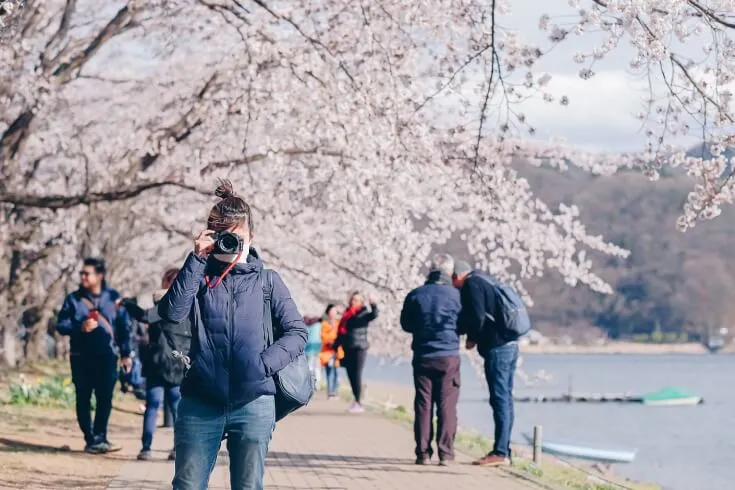
April and May are the best times for cherry blossom viewing, depending on where in the country you are (but also the busiest time of year). Autumn (September through to November) is also popular for autumn views; however, it can still be warm and humid, especially earlier in the season. December to March is perfect for winter travel and for those with skiing plans. June, July and August are the peak of summer weather, with the rainy season bringing up the humidity level. Typical summer weather in August can see temperatures of 38°C and humidity levels in the high 70s to low 80s.
Natural disasters in Japan
Japan is relatively safe, but there are a range of natural disasters that travellers need to know about. Earthquakes, tsunamis, typhoons and volcanic eruptions are common across Japan. So, before you fly, make sure to brush up on what to do in a natural disaster and learn about the climate of the areas you’ll be visiting. There are also a few emergency broadcasting stations in English and emergency apps you should note down before jetting off.
Safety in Japan
While Japan has a low overall crime rate, that doesn’t mean it isn’t non-existent. In busy nightlife areas in Tokyo (Roppongi, Shibuya and Shinjuku) and Osaka (Shinsaibashi, Namba and Dotonbori), crimes targeting tourists in bars and nightclubs are more common. This can include overcharging, fraudulent credit card charges, drink spiking and assault. That doesn’t mean you can’t enjoy a night out. Just keep your wits about you, and don’t get roped in by street promoters offering deals that seem a little too good (or too cheap) to be true.
Visa requirements
Australian national travellers to Japan can enter visa-free for up to 90 days. If you’re planning a longer trip, you’ll need to organise a visa. You’ll need to carry your passport with you at all times, even with the visa-free entry. Japanese police will occasionally do random checks to make sure you’re in Japan legally, and if you don’t have it on you, as a worst-case scenario you could be fined up to ¥100,000 (about $900 AUD).
‘If you plan on using Japan’s bullet trains, don’t just assume the JR Rail Pass is your best bet. It used to be affordable, but now it really depends on your itinerary. There are a few fare calculators you can use to get a better estimate on how much your train tickets will cost, to see if you can save money.
If you decide to do it all yourself rather than purchase the pass, the machines are easy to use! Just don’t do what I did and accidentally book a ticket to Nagoya instead of Nagano (which are 276 km apart!) If you want help with your tickets, all the major stations will have attendants or tourist information centres that can help you book it all.’
Rachel Gregg
Digital Writer, iSelect
Frequently asked questions
What companies offer travel insurance for Japan?
There are many Australian travel insurers who offer policies for Japan such as Southern Cross Travel Insurance, Fast Cover, 1Cover and Insure4less. iSelect partners with several providers to offer a range of policies to compare for your trip to Japan.
Some brands that iSelect can help you compare include:
- Fast Cover
- Huddle Insurance
- Insure4less
- InsureandGo
- ReadySet Travel Insurance
- Southern Cross Travel Insurance
- Tick Travel Insurance
- Travel Insurance Saver
- Travel Insuranz
- Travel Protect
- WAS Insurance
- World2Cover
- Zoom Travel Insurance
Other travel insurers in the market include:
- 1Cover
- Allianz
- Blue Insurance
- Budget Direct
- Bupa Travel Insurance
- Cover-More
- Everyday Travel Insurance
- Medibank
- Nib
- RACV Travel Insurance
- Travel Insurance Direct
Note: iSelect does not compare all travel insurance providers in the market, or all products offered by our partners in your area.
What travel insurance do I need for Japan?
A comprehensive single-trip policy could be beneficial when organising international travel insurance for a holiday. While it’s not mandatory for entry, comprehensive travel insurance can help cover common travel issues like lost luggage, cancellations, medical cover and emergency medical evacuation. Policies with extra cover options are also considered worthwhile if you’ve got snow plans or adventure activities in mind. But the exact type of travel insurance you’ll need depends on the kind of trip you’re planning.
If you’re adding Japan to your gap year and need a policy that doesn’t drain your paper-thin budget, a basic or medical-only cover might do the trick. But if you plan on mixing your days up with a trip to Universal World in Osaka, then a quiet tea ceremony in Kyoto, a comprehensive level of cover might be better. No matter what policy you opt for, you’ll want to keep your bases covered, no matter what you might have planned.
Don’t forget to look at option add-ons for rental vehicle excess, snow sports cover or adventure sports options (for those looking to climb to more thrilling heights).
Will I be covered for COVID-19?
Many insurers include COVID-19 coverage, but not all insurers cover the same things. For example, travel insurance providers won’t cover the cost of COVID-19 testing or medical expenses after you’ve returned to Australia but might cover any additional expenses if you’ve been diagnosed while overseas. So, make sure to always read through your policy’s product disclosure statement to see what you might have to pay for if you catch COVID.
Say ‘konnichiwa’ to stress-free travel in Japan
From Kyoto’s quiet temples to Shibuya’s futuristic buildings, travel insurance can help keep your Japan trip running more smoothly than a 320 km/h shinkansen. Start comparing travel insurance from a range of brands to look for a great policy when planning a picture-perfect Japanese adventure. With a good-value policy by your side, the most stressful part of your trip will be finding a bin after your konbini snack.
Easily compare Travel insurance quotes
Save time and effort by comparing a range of travel insurance policies with iSelect
iSelect does not compare all travel insurers or policies in the market. Travel insurance is only available through our website and not all policies are available at all times or in all areas. Not all policies available from our partners are compared by iSelect and due to commercial arrangements and customer circumstances not all policies compared by iSelect will be available to all customers. Click here to view iSelect’s range of providers.
iSelect General Pty Limited ABN 90 131 798 126, AFS Licence Number: 334115. Any advice provided by iSelect is of a general nature and does not take into account your objectives, financial situation or needs. You need to consider the appropriateness of any information or general advice iSelect gives you, having regard to your personal situation, before acting on iSelect’s advice or purchasing any policy. You should consider iSelect’s Financial Services Guide which provides information about our services and your rights as a client of iSelect. iSelect receives commission for each policy sold.