
.svg)


How Much Does Hernia Surgery Cost?
How Much Does Hernia Surgery Cost?





Written by
Tina Sendin
Edited by
Ellie Garran
Reviewed by
Andres GutierrezCompare Health Insurance Policies
Save time and effort by comparing a range of Australia’s health funds with iSelect

What is hernia surgery?

Long story short
Hernia surgery can cost anywhere from $1,000 to nearly $7,000 in a private hospital
Costs vary depending on the type of hernia, specialist fees, and other factors.
Most patients with health insurance pay around $500 out of pocket
About 70% of patients with private cover still fork out a few hundred bucks to help cover specialist fees.
Surgery in the public system is free, but wait times can stretch to nearly a year
In 2023–24, 10% of public patients waited more than 338 days for inguinal hernia surgery. Private cover can speed things up.
What is hernia surgery?
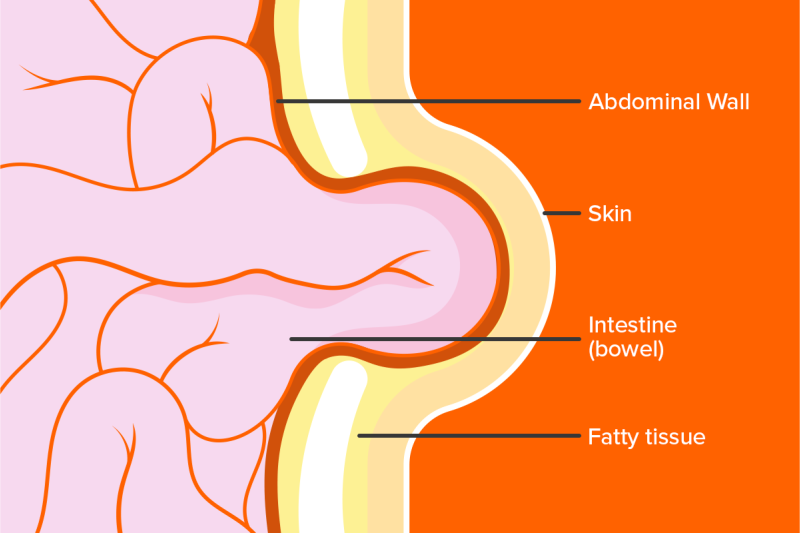
A hernia occurs when an internal organ or fatty tissue pushes through a weak spot in the surrounding muscle or connective tissue wall, often resulting in a noticeable bulge or lump.
A hernia’s not usually the most appealing thing, but there’s nothing to be embarrassed about. It’s sometimes caused by weakness in the abdominal wall after giving birth or abdominal surgery. It could also develop because of increased pressure in the abdomen – usually from obesity, chronic cough, or constipation.
Or it could also just develop over time.
What are the types of hernias?
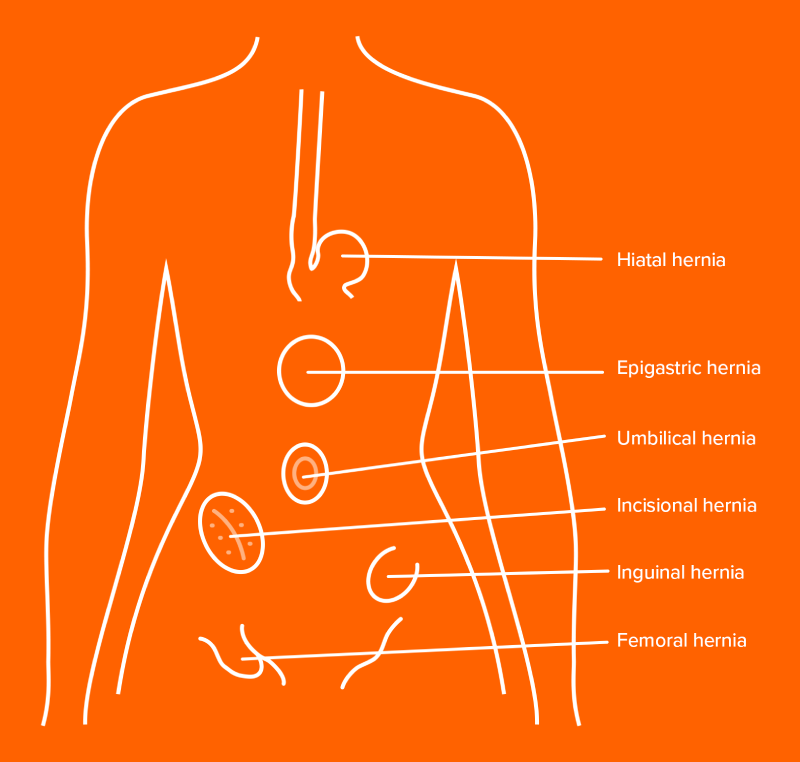
There are a few different types, depending on where the hernia’s found in the body:
- Inguinal hernia: This is the most common type, especially in men, and pops up in the groin area.
- Femoral hernia: More common in women, this also appears in the groin, but at the top of the inner thigh.
- Umbilical hernia: Sometimes called a belly button hernia, this happens near the navel. This is more common among babies and toddlers.
- Hiatus hernia: This is an internal hernia where part of the stomach pushes up through the diaphragm into the chest.
- Epigastric hernia: This happens when a small part of tissue pushes through the abdominal wall or muscles between the chest and belly. It often doesn’t cause any symptoms and can affect kids.
- Incisional hernia: This can happen after you’ve had abdominal surgery, with tissue pushing through the old incision scar.
How are hernias treated?
While some hernias are just a bit annoying, others can cause serious pain and discomfort. In that case, a surgical repair could be on the cards. In fact, surgery is the only permanent solution for hernia.
Hernia surgery is a common procedure to reposition the escaped tissue back into place. The goal is to strengthen the weakened muscle or tissue wall. This can be done via laparoscopic (keyhole) surgery or open surgery, depending on the hernia’s type and severity.
Laparoscopic surgery is minimally invasive, using small incisions and a camera, while open surgery requires a larger incision. In many cases, a synthetic mesh is used to reinforce the area and prevent recurrence.
Hernia repairs are usually done at a dedicated day surgery or in the day surgery wing of a hospital. The whole thing typically takes anywhere from half an hour to a couple of hours, depending on how tricky it is.
How much does a hernia surgery cost?
The hernia surgery cost can vary wildly. In the public system, it’s fully covered (thanks, Medicare) – but you could be waiting for quite a long time. In a private hospital, it could cost thousands, but private health insurance can help with some of that cost . The total cost of a hernia operation in the private system can range from around $1,000 to around $7,000 if you need multiple procedures.
The final hernia surgery cost depends on the following:
- surgeon’s and anaesthetist’s fees: what the specialists charge for their time and expertise
- hospital fees: this covers your bed, theatre use, and other hospital-related charges
- consultation fees: the initial consultations to diagnose the issue
- diagnostics: what you might pay for lab tests and scans.
Let’s look at a couple of examples based on the types of hernia. The Australian Government’s Medical Costs Finder gives us a good idea of what to expect for the costs of an inguinal hernia surgery and umbilical hernia surgery.
Typical costs for hernia surgeries in 2023-24
| Femoral or inguinal hernia surgery | Umbilical hernia surgery | |
| Typical specialist fee | $2,200 | $1,700 |
| Medicare covered | $750 | $590 |
| Insurer typically paid | $700 | $550 |
| Typical out-of-pocket cost | $500 | $500 |
| Percentage of patients with an out-of-pocket cost | 73% | 70% |
Source: Medical Costs Finder – Femoral or inguinal hernia repair; Umbilical hernia repair
Note: These are the amounts patients typically paid for these services, rounded to the nearest dollar. They do not include hospital payments such as excesses, co-payments, or other payments. These fees may vary depending on your situation. Not all patients had out-of-pocket costs; those who didn’t aren’t included in these figures. Data retrieved November 2025.
The dollar figures on specialists’ fees, and how much Medicare and health funds typically cover, vary a little bit depending on the type of surgery. But the interesting part is that for both types of surgery, approximately 70% of patients have to pay around $500 out of pocket. It’s no pocket change, but it’s still heaps better than having to shell out thousands for anaesthetist, surgeon, and assistant surgeon fees. And it comes with benefits like shorter wait times, being able to choose your own surgeon, and potentially getting to recover in a private room.
Are there other out-of-pocket costs for hernia surgery?
Hospital fees for the room, theatre, or medical devices can potentially hit your wallet hard when you go under the knife. For femoral or inguinal hernia repair, hospital fees are typically around $3,900 while those for an umbilical hernia are around $2,600 Your private health fund will generally cover all or most of this cost if you are treated at a partnered hospital – but of course it all depends on the level of cover.
You might also need to factor in other out-of-pocket expenses:
- Hospital excess: This is an up-front fee you pay when you’re admitted to a private hospital and can be up to $750, depending on your policy.
- Co-payment: Some health insurance policies require you to pay a set amount for each day of your hospital stay.
Are there other costs after a hernia surgery?
The expenses don’t stop when the surgery does. Yes, you read that right: recovery also has its own price tag.
You might need to factor in aftercare costs – say for pain relief medication and follow-up appointments with your surgeon to make sure you’re healing properly.
You might also need to take some time off work, which could mean lost income if you don’t have sick leave. Most people need a few weeks to recover from the surgery. If your day job involves heavy lifting, you might need four to six weeks off work.
How long will I have to wait for a hernia surgery?
Let’s answer this question in two ways: waitlists and waiting periods.
Is there a waitlist involved for hernia surgery?
If you’re going through the public system, you could be waiting a fair while. In fact, in 2023–24, 10% of public patients waited more than 338 days (a little over 11 months) for inguinal hernia surgery.1Australian Institute of Health and Welfare – Waiting times by intended procedure (Inguinal herniotomy/herniorrhaphy)
But if you’ve got private health cover, it’s a different story. It mostly comes down to when your surgeon’s free, which is usually a lot sooner than 11 months.
Do I need to serve a waiting period with my health fund?
One thing to keep in mind is that health funds have waiting periods. If your hernia is a new condition that developed after you took out your policy, the waiting period is typically two months. However, if it’s considered a pre-existing condition, the mandated waiting period for hospital cover is 12 months.
 Helpful tip

If you’ve been dealing with a hernia – or reckon one might be brewing – it’s a smart move to get your hospital cover sorted early. Hernia surgery is considered elective, so if you’re going through the public system, you could be waiting awhile. And if you’re going private, your health fund won’t cover you straight away unless you’ve served the waiting period.
So if you’ve got a niggle or know you’ll need surgery down the track, don’t leave it too late. Getting covered now means you’ll be good to go when it’s go time.
Andres Gutierrez
General Manager – Health
What level of health insurance do I need to cover a hernia surgery?
To be covered for a hernia operation, you’ll need a hospital insurance policy. ‘Hernia and appendix’ procedures are included in bronze policies and above (that is, silver and gold). In some cases, they might also be covered under basic plus.
It’s always a good idea to check your policy documents or give your insurer a call to confirm you’re covered.
Frequently asked questions
Is a hernia operation covered by Medicare?
Yes, Medicare covers the cost of hernia surgery. If you have the procedure as a public patient, Medicare will cover all the costs. Great stuff for the wallet, but not so great to sit in the public waiting list for potentially almost a year.
If you want to skip the long queue, private health insurance could help you get the surgery faster.
Why would I need a hernia repair?
You’d need a repair if the hernia is causing pain or discomfort, or if there’s a risk of serious complications like strangulation – where the part of the bowel that’s pushed through gets its blood supply cut off. Not to be all doom and gloom, but this can lead to serious health issues.
If you suspect a hernia, it’s a good idea to consult your GP to discuss treatment options and avoid complications.
Is it worth getting hernia surgery?
If a hernia is affecting your quality of life or poses a health risk, then getting it fixed is well worth it. It can relieve pain and allow you to get back to your normal activities without worrying about a painful bulge.
Health cover doesn’t have to feel like a strain
Sorting out your health insurance can sometimes feel like you’re about to burst at the seams. Especially if there are so many options to choose from!
With iSelect, you can easily compare and find a health policy, so you’re not left clutching your side when it’s time for surgery.
Jump online to use our comparison tool or give our friendly team a bell on 1800 784 772 to get started today!
Compare health insurance policies the easy way
Save time and effort by comparing a range of Australia’s health funds with iSelect


WE’RE HERE TO HELP
Need help with health insurance?
We can help you find a suitable product for your needs

Health Insurance & Tax
Tax Implications on Health Insurance
The Medicare Levy Surcharge
About the Life Time Health Cover Loading
The Private Health Insurance Benefit Codes
iSelect does not compare all health insurance providers or policies in the market. The availability of policies will change from time to time. Not all policies available from its providers are compared by iSelect and due to commercial arrangements, your stated needs and circumstances, not all policies compared by iSelect are available to all customers. Some policies and special offers are available only from iSelect’s contact centre or website. Click here to view iSelect’s range of providers