
.svg)


The Cost of Installing Solar Panels in Victoria
The Cost of Installing Solar Panels in Victoria




Written by
Rachel Gregg
Edited by
Andrew Kemp
Reviewed by
Julia PaszkaCompare Electricity & Gas Plans
Save time and effort by comparing a range of energy plans with iSelect



Long story short
Solar panel costs vary depending on your setup
Your system size, panel quality, and your installer can all shift the final price around. Adding on a battery and extra features can also bump it up further.
Victorian rebates and schemes can help cut your upfront costs
Between the SRES, state rebates, and battery incentives, many Victorian homes can shave thousands off their new solar systems.
Solar can pay itself back surprisingly fast
Many Victorians can see their solar panels paid back within four to seven years (depending on their system size).
How much does it cost to install solar panels in Victoria?
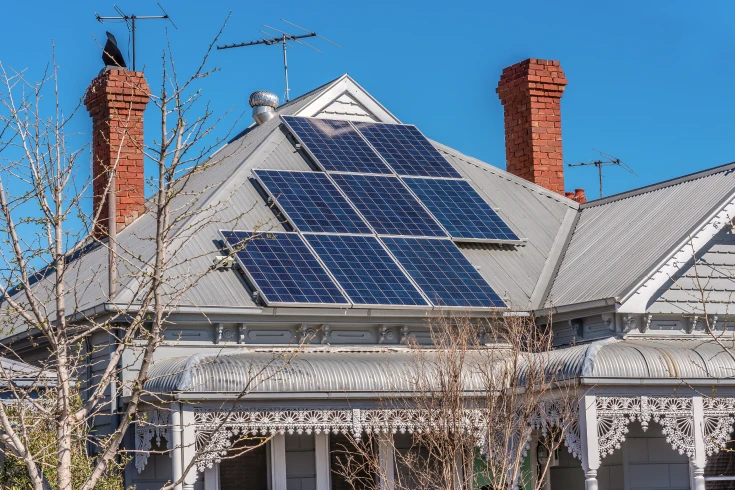
Installing solar panels in Victoria costs $4,800 to $12,000 on average (see table below), without government rebates. While bigger systems will push up the final cost, government incentives can also affect your out-of-pocket costs once they’re up and running.
To give you a ballpark idea of installation costs when switching to solar, check out the table below (which includes potential solar panel rebate savings) to see if solar could fit in with your near-future plans.
Solar panel installation costs in Victoria
| Solar panel size | Average cost (without incentives) | Cost (with VIC solar rebate only) | Cost (with SRES only) | Total cost after both discounts |
| 3kW | $4,800 | $3,400 | $4,100 | $2,700 |
| 5kW | $6,600 | $5,200 | $5,500 | $4,100 |
| 6.6kW | $8,100 | $6,700 | $6,600 | $5,200 |
| 10kW | $12,400 | $10,900 | $9,900 | $8,500 |
Note: These figures reflect typical solar panel pricing in VIC based on third‑party data, rounded where appropriate. Estimates include internal iSelect calculations applied to this data. Actual costs may vary depending on system size, installer, location, and eligibility for incentives. Data retrieved January 2026.
Factors that affect solar panel installation costs

Size of panels
The size of your solar panels not only influences your upfront costs, but it also affects how much energy your home can generate and how that plays into your everyday energy consumption and electricity bills. Doing some research into your current energy usage can help you figure out what size system will best pull its weight. It’ll also mean you aren’t paying for more panels than you need, dragging your payback period longer than necessary.
Quality of solar panels and add-ons
Not all solar panels are created equal and while cheaper options can be tempting, they might compromise quality, performance, or longevity in exchange for affordability. You could also find that some cheaper solar panels aren’t eligible for certain rebates, reducing their financial benefit in the long run.
Your installer also matters, too, with reputable installers often coming with a higher fee.
While it’s important to find panels that are worth their value, there can also be add-on features that affect your system costs. Features like microinverters or 3 Phase inverters might suit certain homes, but they’ll add more onto the final system price.
Smart monitoring device
While installing your solar panels, your installer might offer a smart monitoring device as part of the setup. These devices pull data from your smart meter and inverter to show you how much solar power you’re generating, using, and exporting. They can cost up to $400 but can work out in your favour if you like to keep tabs on your energy habits, system performance, and panel health (or if you just enjoy seeing your panels hard at work).
Adding a battery
For some homeowners, solar panels alone are enough. But others might want the whole kit and caboodle, including a big home battery to store up all that excess sunshine and reduce their dependency on the grid. It’s worth noting that the batteries will add a decent chunk to your upfront costs. Because they aren’t as widely adopted as solar panels, prices are still relatively high in comparison. For example, a 10kW battery for a 6.6kW panel system could add an extra $8,900 to your installation bill.
Are solar rebates available in Victoria?
Victoria is lucky to have a range of solar rebates to help most locals switch to the solar side. Here’s a quick rundown of what federal and state government rebates could be available for you.
Small-scale Renewable Energy Scheme (SRES)
The SRES lets you create and sell certificates based on your solar PV panel size and expected output until 2030. These certificates can be applied as a discount to your upfront solar costs. To be eligible, your solar power system needs to be installed and STCs created within 12 months, and your panels need to be from the approved list.
Cheaper Home Batteries Program
This battery program can offer a discount of up to 30% on the upfront cost of installing a solar battery system. The battery needs to have a capacity of 5–10 kWh for a new or existing solar panel setup.
Solar panel (PV) rebate
This Victorian government rebate could offer a rebate of 50% or up to $1,400 of solar panel installation costs. You just need to make sure you’ve used an accredited solar installer, an eligible panel product, are below certain financial thresholds, and haven’t had solar installed at your property in the last 10 years.
Solar for Apartments
There is a limited number of rebates for up to $2,800 per apartment (maximum of $140,000 per apartment complex property) available. To be eligible, you’ll need to be a Victorian Owners Corporation (OC) member and be a tier three or four OC under the Owners Corporation Act 2006. There’s also specific building eligibility that needs to be met.
Solar rebates for rental properties
For rental properties, a rebate of up to $1,400 is available for the installation of their panels for up to two rental properties a year. An agreement needs to be signed by both owners and renters. This can also be paired with an interest-free loan.
Solar rebates for community housing
Community housing providers could get access to rebates of up to $1,400 per tenancy. Your community housing needs to be a registered CHO-listed property or listed with the Australian Charities and Not-for-Profits Commission.
Are solar panels worth it?
For many homes, rooftop solar is worthwhile. From possibly lowered energy costs and reduced reliance on the main grid to environmental benefits and added value to your home, solar can hit a range of targets for homeowners in Australia.

Pros
Bill savings
While solar panel prices can seem high, the savings can often be seen fairly quickly. Many Melbourne homes can save an average of $1,073 on their annual bills by switching to solar. For a standard 6.6kW panel system, that could mean savings of between $300–$500 per quarter.
Short payback period
Solar panels generally have a relatively short payback period. For a typical 6.6kW panel system, you could see your installation costs paid back within four to seven years. Considering most panels last about 25 years, that’s a lot of time to let those savings stack up.
Less reliance on the grid
While solar panels can make a nice dent in your energy bills, another advantage is that they can help reduce your home from fluctuating grid prices and peak-time network stress. On top of its environmental benefits, solar-powered homes can also support local grid stability if they’re connected to virtual power plants.

Cons
Upfront costs
Even with rebates and schemes, solar panel systems can still come with high price tags and installation costs. It’s a big financial decision to make – especially if you go all out by adding a battery.
Output is weather-dependent
Victoria’s cold winters and unpredictable weather conditions can affect how much energy your panels generate throughout the year. This can affect your solar energy generation, how much you rely on the grid, and your final bills.
Falling feed-in tariffs
As solar becomes more common, feed-in tariffs have started to drop. With schemes like the SRES ending in 2030, many homes will need to focus on changing up their energy habits to self-consume their solar rather than exporting it to the grid (which doesn’t suit everyone).
 Helpful tip

Getting a few free quotes from authorised solar companies isn’t just an easy way to compare panel quality, inverters, product warranty, and installation standards; it’s also a required step in the Victorian solar rebate process. You’ll need your quote to know if you’re eligible, so don’t dive in headfirst and pay any deposits until you get the all-clear from the government.
Julia Paszka
General Manager – Utilities & Credit Cards
Ready to make solar work for you?
Whether you’re picturing brighter power bills or just curious about how solar could look on your roof, a quick comparison of available energy plans could help clear things up and make your decision simpler. With iSelect, you can make this task as simple as flipping a light switch. Compare online from a number of plans and providers, or call our energy comparison experts on 1800 664 532 to find a plan that matches your home.
Get started on comparing energy plans today!
Save time and effort by comparing a range of energy plans with iSelect





iSelect does not compare all energy providers or plans in the market. The availability of plans may change from time to time, depending on who iSelect’s providers are and what plans they make available to iSelect. Not all plans made available from iSelect providers may be compared by iSelect either due to commercial arrangements, area or availability, so not all plans or providers compared by iSelect will be available to all customers. Some plans and special offers are available only from iSelect’s contact centre or website. Energy plans are available only for properties located in eligible areas of Victoria, New South Wales, South East Queensland, South Australia and ACT. Click here to view iSelect’s range of providers.