
.svg)


Why Are Solar Feed-In Tariffs Dropping?
Why Are Solar Feed-In Tariffs Dropping?



Written by
Rachel Gregg
Edited by
Ellie GarranCompare Electricity & Gas Plans
Save time and effort by comparing a range of energy plans with iSelect



Long story short
More Aussie homes are using solar
As of January 2025, over five million homes have rooftop solar, supplying 11.2% of Australia’s electricity.1Clean Energy Council – Rooftop solar generates over 10 per cent of Australia’s electricity
Feed-in tariffs (FiTs) are dropping
FiTs have fallen from 40–60 c/kWh to much lower rates as more solar power floods the grid.
Using your solar power saves more
Making the most of your solar power can help cut electricity costs better than selling power back to the grid.
Australia’s opting for the sunny side
Australia’s known worldwide for its sunny days and scorching heat, so it makes sense we’re soaking up that free energy like a sunbather on Bondi Beach. Why let all that glorious sunshine go to waste?
Our journey towards renewable energy targets has had its ups and downs. But by the last quarter of 2024, we’d had the best year for investment in large-scale renewable energy since 2018. Pretty impressive. And it’s not just the big-league projects making waves – in Australia, rooftop solar accounts for 11.2% of our electricity supply.2As above That’s a huge contribution from us little guys.
With over five million rooftop solar panels installed across the country, it’s clear we’re picking the greener path.3Clean Energy Regulator – Small-scale installation postcode data But let’s be honest. Most people don’t wake up and randomly decide to get solar panels. For a lot of Australians, the big selling point is the chance to get a bit of money back. First with a rebate for their solar installation and then a feed-in rate paid once their panels are up and running.
What are feed-in tariffs (FiTs)?
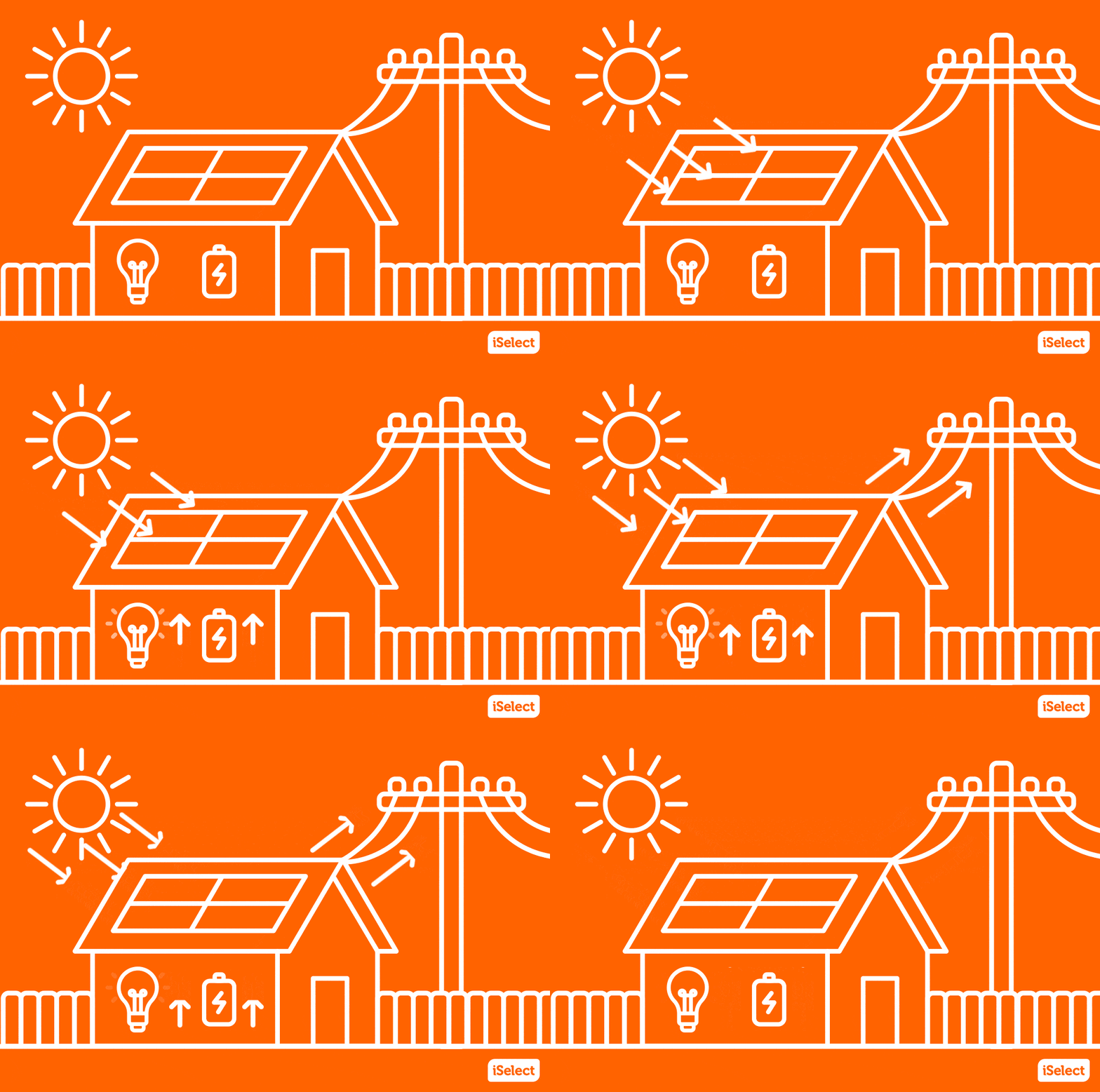
Feed-in tariffs, or FiTs for short, are like a reward system for your solar panels. Except instead of points from your morning coffee, you get credit paid back into your bills for unwanted excess solar. FiTs are paid in cents per kilowatt-hour (c/kWh).
For most homes (with an average usage of 11–23 kWh a day), your solar panels will create more energy than you might know what to do with (standard 6.6 kWh systems typically create about 19–30 kW a day). This could mean a lot of leftover energy you don’t need. Instead of letting it all go to waste, FiTs let you sell it back to the main grid. This way, you can help lift some of the pressure off its shoulders in return for a nice little credit on your bill.
Unlike many other rebates and incentives, FiTs aren’t offered by the government, but by your electricity provider. They also come with the option of a single-rate FiT (same rate no matter when you export energy) or time-varying FiT (higher rates when demand’s high), giving you more options that align with your usage better. That way, you can pick what works best for your energy habits.
Why are my FiTs falling?
You might’ve noticed FiTs aren’t what they used to be, and you’re not imagining things. Even though there are minimum tariff rates to keep things fair, FiT rates have been on a bit of a downward slide lately. There are a few reasons behind this.
FiT rates started out super high to encourage people to get solar
If you were an early adopter of solar when feed-in tariffs were first introduced (about 16 years ago), you would’ve signed up to a generous rate (up to 60 cents per kWh). But these feed-in rates were only ever supposed to be temporary, to help encourage homeowners to switch to solar and help them cover its big upfront costs. Fast forward to 2025, and you can see the success this FiT initiative had. Solar panels are popping up everywhere, which is great for the environment but not so great for keeping those high FiT rates.
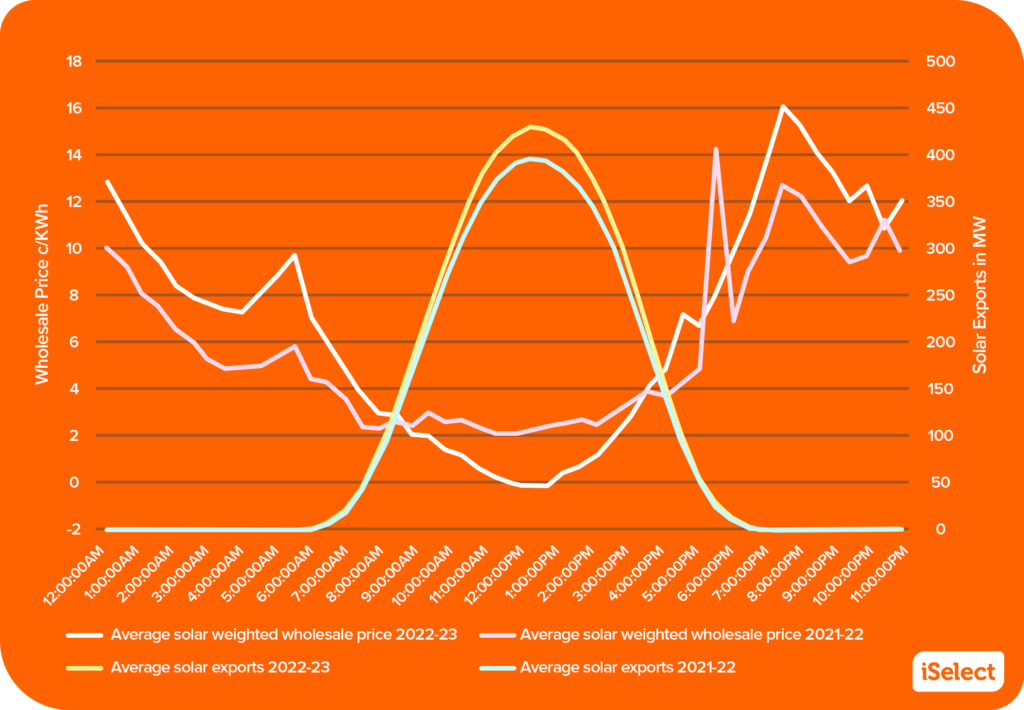
Most solar is fed back during the day, when there’s not much demand for it
Solar panels do their best work during the day when many of us are at work or out living life. So, even though millions of solar-powered homes are feeding energy back into the grid, there’s less demand for it at that time. With over five million Aussie homes sending excess solar power into the grid, energy providers aren’t exactly jumping to pay top dollar for power they don’t really need.4As above
Source: ESC – Minimum feed-in tariff review 2024-25, pg 11, figureS.3
Is Solar still worth it for my home?
Now, you might be questioning whether getting solar is even worth it. Or how much longer it’s going to take to pay off your panels. Well, it still can be worth it, provided you use it in the right way.
So, how can you make solar worth it?
Adjust your habits
Adjusting your habits and using the majority of your power during the day, otherwise known as self-consumption, makes sure you’re making the most of your panels. You could still have some leftovers to send back into the grid afterwards, which can lighten any usage costs later in the night.
Install a battery
A solar battery stores any leftover energy created, so instead of jumping back onto the grid at night, you can use that saved-up energy from earlier in the afternoon. Just keep in mind that batteries are expensive, and if you have to jump back on the grid, usage rates can be too. But just like how solar panels have become more and more affordable, it’s predicted that batteries (eventually) will too.
Join a virtual power plant (VPP)
A VPP is like a neighbourhood energy-sharing club: homes with solar batteries connect to form a mini network, sharing stored power during peak times. It kind of works the same way as FiTs do, but your energy goes to a small group of households rather than back to the grid. This means that your battery will be controlled by the VPP operator, but in return you can get reduced energy bills or regular compensation for being part of the VPP.
Solar cuts aren’t all doom and gloom
Sure, feed-in tariffs aren’t what they used to be, but that doesn’t mean solar’s lost its spark. The real win comes from using your own sunshine during the day instead of relying on exporting it. With electricity prices climbing and solar panel costs dropping, you may be able to save this way in the long run.
And if you want to squeeze out even more value, getting a battery or joining a virtual power plant could be your next move. Falling tariffs or not, there are still plenty of bright sides to going solar. To see if you can find an electricity plan that still makes it worth your while, jump online and use iSelect’s comparison tool to browse from a range of providers and plans.





Get started on comparing energy plans today!
Save time and effort by comparing a range of energy plans with iSelect
iSelect does not compare all energy providers or plans in the market. The availability of plans may change from time to time, depending on who iSelect’s providers are and what plans they make available to iSelect. Not all plans made available from iSelect providers may be compared by iSelect either due to commercial arrangements, area or availability, so not all plans or providers compared by iSelect will be available to all customers. Some plans and special offers are available only from iSelect’s contact centre or website. Energy plans are available only for properties located in eligible areas of Victoria, New South Wales, South East Queensland, South Australia and ACT. Click here to view iSelect’s range of providers.