
.svg)

Car Insurance Write-Offs
Car Insurance Write-Offs




Written by
Kervin Mathew
Edited by
Laura Crowden
Reviewed by
Adrian BennettCompare car insurance policies the easy way
Save time and effort by comparing a range of car insurance quotes with iSelect

What does it mean if my car is written off?

Long story short
Write-offs usually happen when repairs cost more than 50% of your car’s value
Depending on the damage, insurers may label the write-off as statutory or repairable.
Comprehensive insurance is your best bet for write-off protection
It can cover your car in most write-off scenarios – even if you’re at fault or the other driver is uninsured.
New-for-old car replacement cover could get you a brand-new car even after a total loss
It generally comes as an option only with comprehensive cover and with a couple of conditions.
You might still owe money on a car you no longer own
If your car is on finance and gets written off, your payout may be used to repay the outstanding loan amount.
What does it mean if my car is written off?
Put simply, if your car is written off, it means that it’s not economical or safe to repair. Typically, if you claim a write-off on your car insurance, it becomes your insurer’s property, you get a payout and say goodbye to what was once your car.
As a rule of thumb, a car is considered a write-off if repairing it is likely to cost 50 to 70% of its market value before it was written off. Write-offs can be either statutory or repairable and are sometimes referred to as a ‘total loss’.
Statutory write-off
A statutory write-off is when your car is damaged to an extent that it can’t be repaired and driven safely again and can only be used for spare parts. For example, a statutory write-off may apply to a car that’s suffered a bent frame from an accident or severely damaged by storm water.
Repairable write-off
A repairable write-off, as the name suggests, indicates that you could buy the wreck back from your insurer and try to restore it to its former glory. But doing so would make little or no financial sense. What qualifies a write-off as repairable can depend on your state or territory.
Does insurance cover my car if it’s written off?
Well, it depends on your cover. Car insurance can cover a write-off, but it depends on what type of car insurance policy you have and whether or not you were at fault.
If you were not the driver at fault, the other driver’s insurer typically pays for any damage to your car. But if you caused the damage or the other driver is uninsured, you’ll probably have to rely on your own car insurance. And generally, only comprehensive car insurance covers at-fault write-offs.

Third-party cover
More often than not, a third-party property only policy won’t cover any damage to your car, let alone a write-off. Rather, it’s meant to cover any damage you’ve caused to someone else’s car. Third-party property, fire, and theft insurance may cover your car only if it was written off due to a fire or stolen and not recovered.

Comprehensive cover
While third-party cover can come with its ‘ifs’ and ‘buts’, comprehensive car insurance usually covers write-offs in almost every situation, including if:
- the driver who damaged your car doesn’t have car insurance
- you’re at fault and your car is written off
- you couldn’t identify the driver at-fault or they refuse to cooperate.
Before you buy a policy or decide to renew it, you can go over its product disclosure statement (PDS) to be sure of what happens in the (hopefully unlikely!) event of a write-off.
How much damage does it take to write off a car?
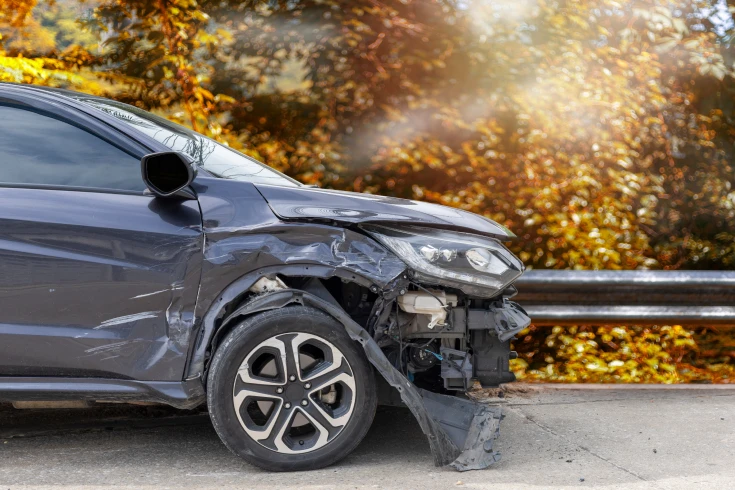
At first glance, it may seem clear as day that a car is a write-off – say if it resembles a beaten-up toaster on wheels. In contrast, some damage may be hidden yet severe enough to compromise the overall safety of the vehicle.
A car is usually considered a write-off based on the nature of the damage, including:
- the incident that caused the damage – such as a fire, hail or a collision
- which parts of the car are damaged
- how severe the damage is.1For more information, see Personal Property Securities Register – Understanding written-off codes
Who decides if my car is a statutory or repairable write-off?
Typically, your insurer sends out an assessor to decide if your car is a write-off and what type of write-off it is. The assessor’s job also includes looking at other factors that will help determine your potential payout, such as:
- listed market prices of similar car models
- photos of your car before it was written off
- your car’s odometer reading.
I think my car may be a write-off. What happens next?
- If you have had an accident and are at fault, you can make a claim on your comprehensive policy.
- Your insurer will send an assessor to assess the damages and they will determine if your car is a write-off and whether it’s statutory or repairable.
- The assessor calculates a potential payout considering your car’s market value and condition. This might not be necessary if you have agreed value cover.
- If your car is written off, your insurer issues you with a payout, minus other charges such as your excess, remaining premium or outstanding loan amounts.
What is new-for-old car replacement cover?
It’s hard enough being told that your precious car belongs in the scrapyard, especially after you’ve put the time, effort and money into buying it. That’s why it could be worth looking at a comprehensive policy with a new-for-old car replacement cover. With new-for-old cover, your insurer may be able to replace your written-off car with a brand new one of the same or similar make and model.
Keep in mind, new-for-old car replacement cover may come with conditions such as:
- you bought your car from a licensed dealer as a new or ex-demo model
- your car was written off within a specified period from its original registration date
- your car’s odometer was below a specified limit at the time of the write-off.
One of the benefits of new-for-old car cover is that it saves you the trouble of going through the buying process all over again. It can even cover costs related to registration, stamp duty and compulsory third-party insurance as well as delivery charges.
How much do insurers pay out for a written-off car?
Your payout for a write-off can depend on whether you have a market value or agreed value policy.
- A market value policy would consider how much your car would sell for on the open market in its condition just before it was written off. Your insurer would then use this value to decide your payout.
- With an agreed value policy, you lock in your car’s value when you buy your policy. Though an agreed value policy can come with a higher premium, it offers more certainty with your payout in the unfortunate event of a write-off.
Of course, you also have to consider any excess you might have to pay when you make a claim on your policy as this will be deducted from your payout. If the write-off is repairable and you decide to buy it back, your insurer may also deduct the ‘salvage value’ from your payout.
What if I bought my car on finance and it’s written off?
Usually, if you’re buying a car on finance, the lender will want you to have comprehensive insurance and will probably ask you to list them on the policy. If your car is written off while still under finance, your insurer may pay your lender any outstanding loan amounts and deduct it from any payout – that’s if your write-off claim is accepted by your insurer.
If the insurer rejects your write-off claim, you may find yourself in the unfortunate situation of repaying a loan on a car that’s written off and can’t be used.
 Helpful tip

Car insurance is all about reducing financial risk. And few things are financially riskier than having your car written off with money still owed on it. Though third-party cover is usually a cheaper option, it generally won’t cover a write-off unless your car is damaged by fire or if you’re not the driver at fault. Comprehensive car insurance, on the other hand, can cover your car in nearly every write-off scenario, giving you that added level of protection and financial security.
Adrian Bennett
General Manager for General Insurance
Frequently asked questions
How do I keep a repairable write-off?
Your insurer may let you keep a repairable write-off instead of sending it off to a scrapyard. In this case, you’d have to make a claim and ask your insurer if you can buy the wreck back. Bear in mind, if you get to keep your written-off car, your insurer may deduct the value of its salvageable parts from your payout.
Can I get insurance for a repairable write off?
Yes, you can insure a repairable write-off but only if the wreck is fully repaired, approved as roadworthy and re-registered. Your state or territory’s road transport authority may have its own criteria that can make a repairable write-off eligible for re-registration.
Even after a write-off is repaired and re-registered, it’s always up to the insurer to decide whether or not to insure your repairable write-off.
How do I check if a car’s been written off in Australia?
A car that’s been previously written-off in Australia has its vehicle identification number (VIN) entered in the Written-Off Vehicle Register (WoVR).2For more information, see Government of Western Australia, Department of Transport – Write-off a vehicle
While a WOVR is not something you can simply walk up to, flip through its pages and find a write-off, you can check if a car’s been written off by doing a personal property securities register (PPSR) check either online or over the phone.
A PPSR check lets you know if you’re buying a car that has been written off or stolen or has money owing on it. Before you do a PPSR check, be prepared with the vehicle’s VIN as other forms of identification like the rego or engine number aren’t sufficient.
What happens to my insurance and rego if my car is written off?
You still have to pay your insurance
Unfortunately, if your car is written off, you’ll still need to pay the outstanding premium on the rest of your policy’s term, even if you pay for your car insurance monthly. To make things easier, insurers may deduct your outstanding premium from your payout – just like they would with your excess.
Rego and CTP may be refunded
Your insurer may deduct costs related to unused registration fee or compulsory third party (CTP) costs for a written-off car when calculating its market value. The good news is you may be able to get a refund of your unused CTP and registration costs from your CTP insurer and state transport authority, respectively.
Get covered on all fronts
With the backing of solid car insurance, you can more easily brush off a write-off and get back on the road in no time. Use iSelect’s car insurance comparison tool to compare policies from our range of providers and give yourself the financial protection you need.
Get started on comparing car insurance policies!
Save time and effort by comparing a range of car insurance quotes with iSelect





iSelect General Pty Ltd (ABN 90 131 798 126. AFSL 334115) has partnered with Compare the Market (ABN 83 117 323 378. AFSL 422926) to compare a range of car insurers and policies. Not all providers in the market or all policies offered by the partners are compared and not all policies or special offers are available to all customers.
A number of our participating general insurance brands are arranged by Auto & General Services Pty Ltd ACN 003 617 909 on behalf of Auto & General Insurance Company Limited 111 586 353, both of which are related entities of iSelect Limited. Our relationship with those companies does not impact the integrity of our comparison service. Click here to view iSelect’s range of providers.
Any advice provided by iSelect is of a general nature and does not take into account your objectives, financial situation or needs. You need to consider the appropriateness of any information or general advice iSelect gives you, having regard to your personal situation, before acting on iSelect’s advice or purchasing any policy. You should consider iSelect’s Financial Services Guide which provides information about our services and your rights as a client of iSelect. iSelect receives commission for each policy sold that is a percentage of the premium or a flat fee. Ask us for more details before we provide you with any services.