
.svg)

Performance Car Insurance
Performance Car Insurance




Written by
Kervin Mathew
Edited by
Laura Crowden
Reviewed by
Adrian BennettCompare car insurance policies the easy way
Save time and effort by comparing a range of car insurance quotes with iSelect

What is a high-performance car?

Long story short
Insurance costs more for high-performance cars
Expensive parts, higher accident rates, and theft risks drive up premiums. Extensive modifications can also increase insurance costs.
Specialist insurers understand the segment
Specialist insurers can better understand the needs of high-performance car owners, but this can come with higher premiums.
Performance car insurance can be customised
Policies from specialist insurers generally include agreed value cover, salvage rights and choice of repairer, plus the option to add on extras like laid up cover and limited use cover.
You can still lower your insurance costs
Secure parking, anti-theft devices, and a clean driving history can help lower your premium.
What is a high-performance car?
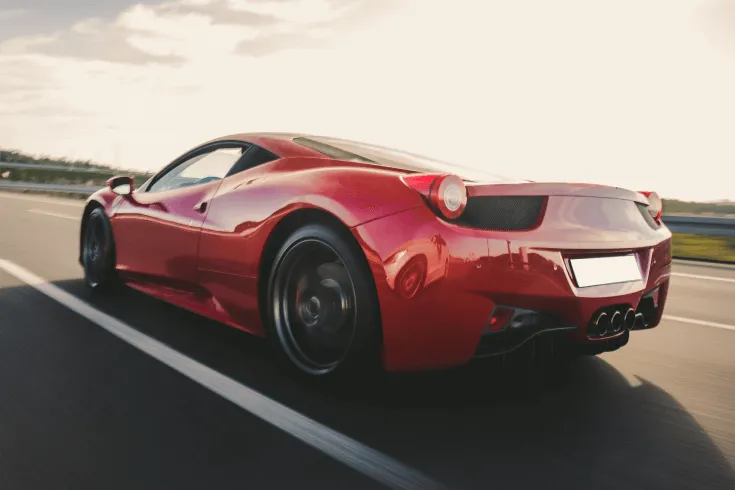
Think powerful, sporty and luxurious. High-performance cars are not an everyday SUV to drive the kids to school in. They’re fast, flashy and can make heads turn like Dua Lipa teaching Usain Bolt one of her iconic dance moves!
Names like Porsche, Ferrari, Lamborghini, Bugatti should give you an idea of what might qualify as a high-performance car. And it’s not just the upmarket brands. A Ford Focus packed with performance-boosting modifications or horsepower-heavy muscle cars can also wear the ‘high-performance’ badge.
What is performance car insurance?
Performance car insurance generally covers the same things as standard car insurance, and then some. With it, your high-performance ride can be covered for events such as accidental damage, third party property damage, fire damage, theft and the like.
While ‘performance car insurance’ isn’t technically its own type of product, some policies feature benefits that are tailored specifically to sports, luxury and muscle cars. So in addition to your run-of-the-mill cover, car insurance for performance cars often gives you additional options such as laid up cover, limited use cover and club plate cover. More on this later. Let’s first look at how you can go about picking an insurer.
What types of insurance can you get for high-performance cars?
Typically, you could go two routes: standard insurance or specialist insurance.
Standard car insurance
Standard car insurance will offer you the same level of cover for a Porsche 911 as it would for a humble Hyundai i20 or trusty Toyota Corolla. You’ll be covered for standard insured events, and you may be able to access optional extras such as window glass and windscreen cover, hire car cover and roadside assistance. Sound familiar?
With a standard insurer, you’d generally be looking past third-party property or third-party fire and theft and towards comprehensive car insurance. That’s because it’s intended to protect your car and comes with optional extras that are more suited to covering high-performance and luxury cars.
That said, some standard insurers may shy away from insuring high-performance vehicles – and that’s where specialist insurers come in.
Specialist car insurance
Specialist car insurers deal exclusively with the high-performance car segment. They tend to have a better understanding of both the cars themselves and what their owners might want out of a car insurance policy.
A specialist insurer has likely seen their share of supercharged engines, roll cages and performance exhausts. They tend to know more about insuring a high-performance car and may offer tailored benefits such as salvage rights, agreed value cover and choice of repairer as base level cover.
Track day insurance
For the motor enthusiast and aspiring V8 supercar racer, track day insurance protects your high-performance car when you’re out on the racetrack or training to be a race car driver.
Most standard insurers will not cover you for racing activities. So, taking out track day insurance is a good idea when you indulge in activities such as:
- Rallies and sprints
- Driver training and experience events
- Exhibition laps and races
- Track and club days
Some track day insurance policies offer optional extras to cover transit damage, spare parts and equipment, and even coverage while your car is in storage.
Standard vs Specialist insurance for performance cars
Standard insurer

Pros
- Lower premiums
- More insurers to choose from

Cons
- Features that benefit performance cars are usually optional extras at additional cost
- May limit cover for performance parts
- May not cover older performance cars or muscle cars
- May not offer salvage rights if the car is written off
Specialist insurer
Pros
- Better understands the needs of performance car owners
- Includes features and benefits relevant to performance cars
- Covers more types of performance cars
- Greater ability to customise your cover
Cons
- Higher premiums
- Fewer insurers to choose from
What are some of the challenges of owning a high-performance car?
Being the owner of a high-performance car can definitely have its perks. However, they can come at a price – higher insurance premiums included.

Higher chance of accidents
With more brake horsepower under the bonnet, it’s easier to lose control and find yourself in a bingle and the resulting damage is likely to cost more to repair.

Specialist parts
High-performance cars feature more complex parts which can be expensive to replace and often require specialist mechanics to install.

Higher maintenance costs
The performance parts that go into delivering the speed and performance may need extra maintenance or more regular servicing compared to more reliable commuter vehicles.

Prone to thefts
Because they’re worth much more, it probably comes as no surprise that high-performance cars are at more risk of being stolen – making them more expensive to insure.
Are performance cars more expensive to insure?
Yes, and for good reason. When setting an insurance premium, insurers consider the risk of an accident and the potential repair or replacement costs.
That’s where high-performance cars tend to take a hit. Not only does their high speed make them more likely to get into an accident, they’re also more expensive to repair.
Here are some other reasons why premiums for high-performance cars are usually higher:
- Non-standard modifications on your performance car can be expensive to repair or replace when damaged. They may also impact the car’s safety rating.
- Your car’s make and model comes with a price tag. The higher the price point, the more it can cost to insure.
- Extra insurance features such as agreed value cover, salvage rights and choice of repairer generally come with an additional cost.
- Your driving history no matter what car you drive can be a big decider, with past accidents and offences likely to increase premiums.1For more information, see Moneysmart.gov.au – Buying and running a car
 Helpful tip:

A high-performance car doesn’t have to come with a six-figure price tag or in fancy colours. There are more affordable sports cars such as the Kia Stinger, Mazda Mx-5 and Toyota GR86 that may fall into the high-performance category. Chat with your insurer or read up on whether you’ll need specialised coverage.
Adrian Bennett
General Manager for General Insurance
How can I reduce my performance car insurance premium?
You don’t need to reinvent the wheel when it comes to reducing your premium. What works for regular cars can work for high-performance cars too:
- Install anti-theft devices to show insurers that you’re taking steps to protect your car. Look at engine immobilisers, car alarms or GPS tracking devices.
- Choose to pay a higher excess if you need to make a claim. It helps take a bit of the financial load off your insurer and can translate to lower premiums.
- Try to limit the number of drivers listed on your policy. Younger, inexperienced drivers can increase the risk of your car being involved in an accident.
- Drive your car less. The less you drive your car, the less chance you’ll be involved in an accident.
- Maintain a clean driving history to let your insurer know that you and your car can stay out of trouble, and to potentially set yourself up for a no-claim discount.
- Keep your car safe in a lock-up garage, under a carport or even parked in a well-lit or monitored area – whatever helps prevent it from being stolen or damaged by weather.
- Do a defensive driving course to help lower your risk profile with insurer and score a potential discount on your premium.
If you’re looking at policies from a specialist insurer, you may also have access to optional extras that can help reduce your premium:
- Laid up cover: If your car is not driven an extended period – like if it’s undergoing extensive modifications – this extra can help you save on insurance costs.
- Limited use cover: If your high-performance vehicle is a weekend car or you save it just for sunny days, you may end up paying less with this cover.
- Club plate cover: If your car belongs to a club and is registered with club plates, this cover can help reduce your premium.
How do I choose the best policy for my high-performance car?
Picking out the best policy for your performance car is something like deciding which fluorescent shade looks best on a Lamborghini. What works for one car owner might not work for another.
Some things to look for when insuring your precious car include:
- Agreed value that includes accessories and modifications
- Salvage rights for total loss vehicles
- Choice of repairer
- Cover for non-standard modifications, including coatings and coverings
- Express freight for importing parts
- Replacement car, travel costs and vehicle delivery after an accident
- Lifetime new car replacement or repair guarantee.
Keep in mind that as the features stack up, the more you’ll have to dish out on premiums. That’s why it may help to shop around and explore policies that fit your needs. You may not get the policy you want, but what you may get is a bargaining chip!
Frequently asked questions
Do I need to declare modifications to my performance car?
Yes. Most insurers – standard or specialist – require you to disclose all modifications you’ve made to your vehicle.
Not only does it help them understand the kind of coverage that your car needs but they can make sure your modifications meet the Australian Design Rules (ADRs) or any other standards set out by your state’s government. Insurers won’t cover illegal modifications.
Should I insure my performance car for agreed value or market value?
Let’s look at the difference between agreed value and market value.
An agreed value is a pre-determined, fixed payout your insurer agrees to pay you if your car is written off or stolen. With market value, the payout is aligned to how much your car would sell for on the market, at the time of the accident or theft.
Many high-performance car insurers only offer agreed value cover – possibly because some performance-enhancing mods can reduce a car’s market value.
Market value cover may work for car brands that don’t depreciate as quickly.
What happens if my performance car is written off?
Having your prized possession wrecked beyond recognition would be gutting, to say the least. If your car is unable to be repaired and re-registered, your insurer will pay you out for either the market value or agreed value of your vehicle – whichever you chose to go with.
While your insurer may take possession of the written-off car and send it to a scrapyard, you might be able to salvage any rare or expensive parts if you have salvage rights included on your policy.
That’s enough torque, let’s compare!
Scoping out the right kind of insurance for your high-performance car? Take our online comparison tool for a spin to see what policies are on offer from our range of providers.
Get started on comparing car insurance policies!
Save time and effort by comparing a range of car insurance quotes with iSelect





iSelect General Pty Ltd (ABN 90 131 798 126. AFSL 334115) has partnered with Compare the Market (ABN 83 117 323 378. AFSL 422926) to compare a range of car insurers and policies. Not all providers in the market or all policies offered by the partners are compared and not all policies or special offers are available to all customers.
A number of our participating general insurance brands are arranged by Auto & General Services Pty Ltd ACN 003 617 909 on behalf of Auto & General Insurance Company Limited 111 586 353, both of which are related entities of iSelect Limited. Our relationship with those companies does not impact the integrity of our comparison service. Click here to view iSelect’s range of providers.
Any advice provided by iSelect is of a general nature and does not take into account your objectives, financial situation or needs. You need to consider the appropriateness of any information or general advice iSelect gives you, having regard to your personal situation, before acting on iSelect’s advice or purchasing any policy. You should consider iSelect’s Financial Services Guide which provides information about our services and your rights as a client of iSelect. iSelect receives commission for each policy sold that is a percentage of the premium or a flat fee. Ask us for more details before we provide you with any services.