
.svg)

What are Defined Events in Home Insurance?
What are Defined Events in Home Insurance?




Written by
Tina Sendin
Edited by
Ellie Garran
Reviewed by
Adrian BennettCompare home and contents insurance the easy way
Save time and effort by comparing a range of home and contents insurance policies with iSelect



Long story short
Home insurance covers specific situations called defined events
Knowing what’s covered can save you from surprises down the line.
Burst pipes, storms, and fires are generally covered
These are your policy’s ‘we’ve got you’ situations.
Exclusions can catch you out
Wear and tear, neglect, or shoddy maintenance? You probably can’t expect a payout.
Accidental damage cover can include mishaps that aren’t defined events
Some insurers include accidental damage in premium policies, but it’s typically an optional extra.
What are defined events?
Defined events – also known as insured or listed events – are outlined scenarios your home insurance provider has agreed to protect you against. Think of it as a safety net for the unexpected stuff, like a storm ripping off your roof or a fire getting out of hand.
Your policy lists up-front exactly what it’s going to cover if there’s loss or damage to your property or belongings.
That said, it’s always worth reading your product disclosure statement (PDS), as defined events tend to vary between home insurance policies and providers. For instance, some include flooding as a defined event, while others only offer it as optional cover.
What are the defined events typically found in home insurance?
Most defined events are situations that you can’t really predict but that can cause major headaches. While the exact coverage depends on your policy, here’s a quick rundown of the usual suspects – the big-ticket items most insurers pop into their defined-events list. Most policies define what they will (and will not) cover under each event. So it’s always a good idea to spend some time understanding what your coverage could look like, as well as the exclusions.

Fire
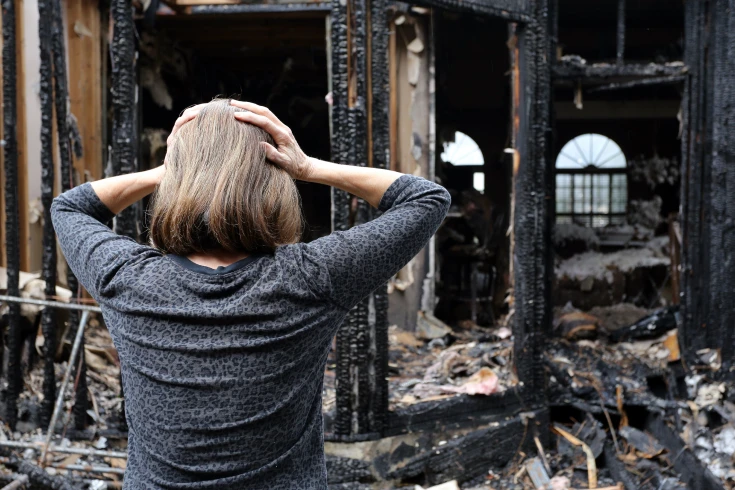
Fire damage is one of the common events covered by home insurance. Whether it’s a small kitchen fire or a blaze that causes significant destruction (like a bushfire), home insurance with fire coverage is there to help you pick up the pieces and get back on track.

Lightning
Lightning strikes can do a real number on your place, from physical damage to the structure to electrical surges frying your appliances. Luckily, most policies have you covered for this.

Storms and rainwater
Storms and heavy rain can cause all sorts of chaos, from leaky roofs to major water damage. Usually, this is covered as a defined event. Just a heads-up, though – some policies don’t include insurance for flood damage under storm cover, so it’s worth double-checking.

Break-ins and theft
If someone breaks in and nicks your stuff, or even just causes damage trying to, your insurance usually steps in. Although if you’re renting your property and a tenant takes off with your furniture, your policy might only cover the theft if you have add-on landlord insurance.

Burst pipes and water damage
‘Escape of liquid’ covers damage caused by things like burst pipes, leaking appliances, or overflowing bathtubs. For example, if a pipe bursts and floods your kitchen, your insurer will usually step in to help with water damage.

Impact events
If you see terms like ‘impact at the home’ in your policy, then damage caused by external forces, such as a car crashing into your fence, a tree falling on your roof, or even debris from a storm, is typically covered.

Malicious damage, vandalism, and riots
If your property is intentionally damaged by others, whether through vandalism or during a riot, your home insurance is there to cover the repairs. Just a heads up, though, that if you’re renting out your property, damages caused by your tenant might not be covered unless you have an add-on landlord cover.

Glass or ceramic breakage
This covers accidental breakage of things like windows, glass doors, or even your bathroom sink, and is handy for those ‘oops’ moments. However, you might want to look into the nitty-gritty of your policy as there might be certain breakages that won’t be covered (unless you get an optional add-on for accidental damage).

Explosion
Explosions might not happen every day, but if they do – like a gas leak going boom – your policy might well have you sorted.
What’s not usually covered under defined events?
Here’s where it gets real – what’s not usually on the list of defined events? Knowing the general home insurance exclusions – or where insurers draw the line – can save you a lot of heartache if you ever get in a hairy situation. Here’s what’s typically left out:
 General wear and tear: If that leaky roof you’ve been putting off turns into damage, your claim might not hold water – literally.
Defects or structural defaults: Issues caused by dodgy building work or design flaws are usually not covered.
Hacking or cyber-attack: If your smart home system gets hacked, most standard policies won’t cover the fallout.
Business activity: Running a business from home? Damage related to your work setup might not be included unless you’ve got specific cover for it.
Pests and vermin: Termites, rodents, and other critters can do a number on your home, but they’re usually your problem to handle.
Your insurer might have certain situations they won’t cover, even if they sound like a defined event. For example, if your tenant fancied the painting in your property so much that they decided to pinch it, it probably won’t be covered for theft unless you’ve got extra landlord cover. It’s a good idea to double-check your policy and take a closer look at what’s covered, and what falls squarely on you.
 Helpful tip

Apart from the exclusions, there are other instances when your home insurance policy might not be able to cover life’s mishaps.
First, let’s state the obvious. Usually, loss or damage from events that happened before you took out your home insurance isn’t covered. Note that home insurance is all about protecting you for future stuff, not sorting out things that’ve already happened.
Also, some policies have a waiting period (or ‘uninsured period’) where you’re not covered for certain events – say within 72 hours of getting your policy for the first time.
It’s worth keeping these two things in mind so you can avoid getting caught up in a sticky situation come claim time. And of course, give your policy a good read so you know exactly where you stand!
Adrian Bennett
General Manager for General Insurance
What’s the difference between ‘accidental damage’ and ‘defined events’?
Defined events are specifically listed in your policy as such. You may sometimes find them in the policy as ‘insured events’.
Accidental damage – at least to the insurer’s eyes – usually refers to misfortunes that aren’t typically included under defined events. We’re talking about spilling red wine on the white couch or your kids knocking over your prized pottery collection. Tough luck!
Accidental damage cover can provide broader protection (or at least include some situations that aren’t considered as defined events). But it can also make your policy cost more.
However, you may also find that some insurers might throw this in automatically with their top-tier home insurance policies.
Of course, it all comes down to how much peace of mind you’re after and what fits your budget. Some people sleep better with a comprehensive plan; others are happy with coverage for the essentials. You do you!
It’s a good idea to give your PDS a squiz to see what’s listed as a defined event and what’s listed as accidental damage (noting that it’s not always clearly defined and can vary significantly between insurers).
How can I make sure my bases are covered?
When looking at your home insurance policy, getting your head around defined events is a good place to start. It’s all about diving deep into what’s covered, what’s not, and making sure your policy lines up with your lifestyle and risks.
Don’t wait until you’re ankle-deep in water or faced with a blown-off roof! It’s a good idea to have a hard look at your policy today to see if you’re protected against the stuff that matters.
And if you’re after an easy way to compare and find a policy that ticks all the boxes, we’re here to help. Get started with a quick online quote using the iSelect comparison tool.
Get started on comparing home and contents today!
Save time and effort by comparing a range of home and contents insurance policies with iSelect
iSelect General Pty Ltd (ABN 90 131 798 126. AFSL 334115) has partnered with Compare the Market (ABN 83 117 323 378. AFSL 422926) to compare a range of home insurers and policies. Not all providers in the market or all policies offered by the partners are compared and not all policies or special offers are available to all customers.
A number of our participating general insurance brands are arranged by Auto & General Services Pty Ltd ACN 003 617 909 on behalf of Auto & General Insurance Company Limited 111 586 353, both of which are related entities of iSelect Limited. Our relationship with those companies does not impact the integrity of our comparison service. Click here to view iSelect’s range of providers.
Any advice provided by iSelect is of a general nature and does not take into account your objectives, financial situation or needs. You need to consider the appropriateness of any information or general advice iSelect gives you, having regard to your personal situation, before acting on iSelect’s advice or purchasing any policy. You should consider iSelect’s Financial Services Guide which provides information about our services and your rights as a client of iSelect. iSelect receives commission for each policy sold that is a percentage of the premium or a flat fee. Ask us for more details before we provide you with any services.