
.svg)

Dangerous driving behaviours
We asked Australians which dangerous behaviours they’ve engaged in behind the wheel
Have you ever reached for your phone while driving or driven over the speed limit? At iSelect, we wanted to discover the truth about our nation’s driving habits. We surveyed over 3,000 Australians and uncovered some surprising (and slightly nerve-wracking) admissions about some of our dangerous behaviours behind the wheel.





Australia’s dangerous driving behaviours
One in six drivers admitted to engaging in at least one dangerous driving behaviour. Speeding topped the list of the most common dangerous driving habits, with 41.2% of drivers confessing to it. The next most prevalent behaviour was driving while extremely tired or drowsy, with nearly one in five drivers (19.4%) saying they’ve driven in that state.

Speeding is the most common dangerous driving habit, with 41.2% of Australians admitting to having done so.
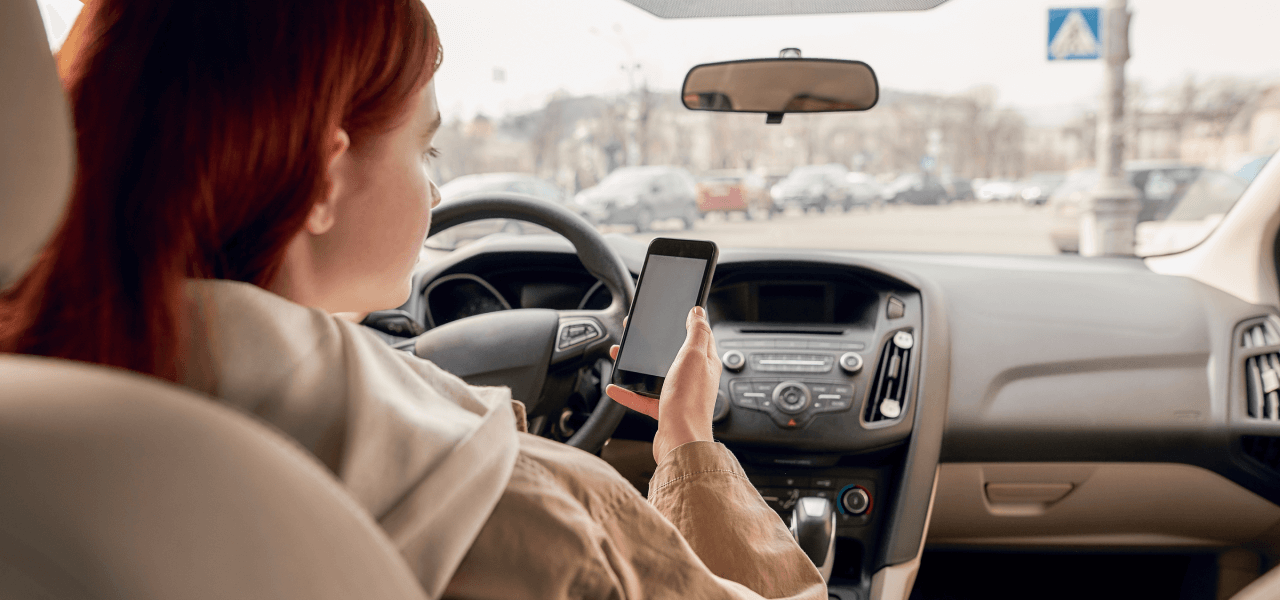
Phone use while driving also emerged as a significant issue. Whether it was taking calls without a hands-free setup (15.4%), messaging or emailing (13.7%), using social media (7.7%), or even taking photos and videos of things outside the vehicle (7.1%), these distractions were among the top eight dangerous behaviours.
With so many drivers admitting to risky behaviour, it’s no surprise that police are cracking down on these offences. Given that nearly one in five Aussies admit to driving while extremely tired or while using mobile phones, it makes sense that recent awareness campaigns have focused on fatigue and more phone cameras have been introduced. By targeting these common dangers, law enforcement aims to make the roads safer and reduce preventable accidents.
Other common habits Aussies admitted to include expressing road rage (14.3%) and getting distracted by passengers. More concerningly, over one in 20 drivers confessed to ignoring dashboard warning lights, steering with their knees, or even driving over the legal limit for drugs or alcohol.
Gender differences in dangerous driving behaviours
When we break it down by gender, there isn’t much difference between the proportion of men and women who have undertaken some form of risky behaviour behind the wheel – 61.5% of women versus 60.1% of men. Speeding was the most common dangerous habit for both men and women, although 4.2% more men admitted to driving over the speed limit. Phone-related distractions, on the other hand, were more common among women.
43.3% of men were more likely to have driven over the speed limit, 4.2% more than women drivers.
Women showed a greater likelihood of carrying out 13 of the 20 types of dangerous behaviours that were surveyed. The biggest difference between men and women was that 17% of women were more likely to be distracted by other passengers, compared to 9% of men. This insight suggests that more mothers might be driving their children than their dads.
Men, however, were more likely to engage in several high-risk behaviours, including speeding, steering with their knees, driving under the influence of drugs or alcohol, watching videos while driving, not wearing a seatbelt, racing other drivers, and even engaging in physical intimacy behind the wheel.
Age differences in dangerous driving behaviours
Gen Z (18–24 year olds) were the most likely to admit to dangerous behaviours behind the wheel, with nearly three-quarters (73.2%) engaging in at least one risky activity. And young people today are more likely to take risks behind the wheel than their older counterparts were, with 70.9% of 25–34 year olds, 65.1% of 35–44 year olds, and just 48.9% of drivers aged 65+ admitting to risky habits.
73.2% of Gen Z were the most like to engage in at least one of the dangerous driving behaviours.
Speeding was the most common offence across all age groups, with the highest rate among 55–64 year olds (42.3%). Driving while extremely tired or drowsy showed a clear trend – 28% of gen Z drivers admitted to it, compared to just 11.6% of those over 65. The same pattern emerged for taking phone calls without hands-free and expressing road rage, with older drivers being far less likely to engage in these behaviours.
Unsurprisingly, younger drivers were more distracted by technology, with many admitting to scrolling social media, snapping selfies, or even watching videos while driving. In contrast, these distractions barely registered among those aged 55+, with less than 5% engaging in these behaviours. And in the middle age group, drivers aged 35–44 were the most distracted by passengers (24.2%), likely a result of juggling kids in the back seat.
The states with the most dangerous driving behaviours
Where you live might have more of an impact on your driving habits than you think. The Australian Capital Territory had the highest proportion of drivers admitting to risky behaviour, with nearly seven in 10 (69.1%) engaging in at least one dangerous activity. Queensland (65.3%) and Victoria (62.3%) followed closely behind. Meanwhile, Tasmania had the safest drivers, with just over half (53.7%) admitting to risky behaviours behind the wheel.
Tasmania had the safest drivers, with just over half admitting to risky behaviours behind the wheel.
Drivers from the ACT were clear leaders in several key categories, being the most likely to admit to speeding (57%), driving while extremely tired or drowsy (25%), and taking a phone call without hands-free (20.6%). ACT drivers were also the most likely to get distracted by passengers (22%), take photos while driving (8.8%), and ignore dashboard warning lights (10.3%).
New South Wales and Victoria had the most drivers admit to expressing road rage, such as yelling or honking their horn at other drivers. Both states also had the highest number of drivers who admitted to having used social media while driving. Queenslanders, on the other hand, were the most likely to run a red light or stop sign. One of the more unexpected findings came from South Australia, where 6.9% of drivers admitted to changing clothes while driving, almost double that of any other state.
The car owners with the most dangerous driving behaviours
It turns out the make of car you drive might say a lot about your behaviour on the road. Audi drivers topped the list for risky driving, with 82.5% admitting to at least one dangerous habit. Volkswagen followed at 70%, while MG (50.9%) and Honda (53.9%) drivers were the least likely to take risks behind the wheel.
Audi drivers topped the list for risky driving, with 82.5% admitting to at least one of the dangerous driving habits.
Speeding was most common among Volkswagen (55%) and Subaru (54.5%) drivers, while road rage was reported most by Volkswagen (23%) and Mercedes-Benz (22.2%) drivers. Mitsubishi (20.3%) and Subaru (20%) drivers were the most likely to answer calls without hands-free, while BMW drivers were by far the biggest offenders when it came to using social media while driving (23.2%), followed by MG (15.8%).
Some brands also stood out for specific risky behaviours. Mitsubishi drivers were most likely to run a red light (10.8%), followed by Volkswagen drivers(10%). Audi and Holden owners were the most likely to ignore dashboard warning lights, at 10.5% and 10.1% respectively, and were also the most likely to race another car, at 7% and 6.7%.
And when it came to selfies and filming themselves behind the wheel? Audi (8.8%) and BMW (8.7%) drivers led the way, suggesting that, for some, the road is just another place to capture content.

It’s concerning to learn a majority of Australians admit to at least one dangerous driving habit, the most common behaviours were speeding, driving while drowsy and the use of mobile phones while driving. These actions are not just hazardous to the driver and others on the road but it’s important to remember that engaging in these could have serious consequences. Not just in terms of accidents, but in some cases could void your car insurance policy.
A reckless driving incident could leave you without coverage in an accident, exposing drivers to significant financial risks. Some claims resulting from such behaviour are often denied. This not only leaves you financially responsible for damages but can also lead to legal penalties and a tarnished driving record.
Adrian Bennett
General Manager for General Insurance
About the data
We commissioned independent survey company Pureprofile to conduct a survey of 3,002 Australian drivers over the age of 18 to analyse the dangerous driving habits and experiences on our roads.
The survey was conducted in line with the nationally representative percentage targets for age, gender, and location (state).
The survey asked respondents: ‘Which of the following behaviours have you engaged in while driving?’. Respondents were able to select as many of the 20 behaviours as were relevant to them.
The top 30 car brands by number of registered passenger vehicles (according to BITRE, Jan 2024) were presented as options for car ownership. If drivers had multiple vehicles, they rivers were asked to select the car brand they drive most.
Some data has been excluded due to small sample size, such as the Northern Territory for states, non-binary for gender, and select vehicle brands for car ownership.
Percentages have been rounded and do not sum to 100% as respondents could select multiple options.
This survey was conducted and analysed in February, 2025.
iSelect does not compare all car insurers or policies in the market. The availability of policies may change from time to time. Not all policies available from iSelect’s providers are compared by iSelect and due to commercial arrangements, area or availability, not all policies compared by iSelect will be available to all customers. A number of our participating general insurance brands are arranged by Auto & General Services Pty Ltd ACN 003 617 909 on behalf of Auto & General Insurance Company Limited 111 586 353, both of which are related entities of iSelect Limited. Our relationship with those companies does not impact the integrity of our comparison service. Click here to view iSelect’s range of providers.
iSelect General Pty Limited ABN 90 131 798 126, AFS Licence Number: 334115. Any advice provided by iSelect is of a general nature and does not take into account your objectives, financial situation or needs. You need to consider the appropriateness of any information or general advice iSelect gives you, having regard to your personal situation, before acting on iSelect’s advice or purchasing any policy. You should consider iSelect’s Financial Services Guide which provides information about our services and your rights as a client of iSelect. iSelect receives commission for each policy sold that is a percentage of the premium or a flat fee. Ask us for more details before we provide you with any services.